- Limitless Creator
- Posts
- Branching: The ChatGPT Feature That Will 10x Your Strategic Thinking
Branching: The ChatGPT Feature That Will 10x Your Strategic Thinking

Jessica Camilleri
September 16, 2025
Sponsored by

Hey creator friends 💜
Last week, something pretty wild happened… OpenAI shared the first collaboration video I’ve done with them about ChatGPT's newest feature: Branching Chats!
If you’ve been wanting a way to keep long and messy chats organised - you’re going to love this feature!



The video went live across their TikTok, Instagram, and LinkedIn, and I’ve had so many DMs asking: "Wait, how do I actually USE this feature?" That I’ve decided to spend the week diving deep into this and finding the bet use cases.
What I found will fundamentally change how you use AI and the results you get from it.
TL;DR - today’s lineup:
One Serious Deep Dive 💡: ChatGPT's branching feature that lets you explore parallel conversations from any point. I'm sharing 10 career-changing ways to use it.
One Powerful Prompt 🤖: The "Voice Cloner" prompt that trains ChatGPT to write exactly like you.
Piping Hot AI Tea 🫖: ByteDance's new image generator making Google nervous, Europe wanting to give AI the 10 Commandments, Perplexity getting sued for plagiarising the word "plagiarise" (really), and Claude quietly becoming your Office assistant.
💌 Your say genuinely shapes this newsletter: there’s a one‑click feedback poll at the very end. Or hit reply and tell me what you loved/hated. I genuinely wait with bated breath to see (an honest) reply from you!
Before we dive in:
The assistant that scales with you
Great leaders don’t run out of ideas. They run out of hours.
Wing gives you a dedicated assistant who plugs into your workflows – calendar, inbox, research, outreach, and ops – so execution never stalls. Wing can:
Onboard in days, not months
Run the day-to-day so you don’t have to
Adapt as your business grows
With Wing, you buy back time without adding headcount. More focus for strategy, more follow-through on priorities, and a lot fewer “forgot to send” moments.
One Serious Deep Dive 💡
Branching: The ChatGPT Feature That's About to 10x Your Strategic Thinking
Branching isn't just about organising your ChatGPT chats, it's about thinking in parallel realities instead of straight lines.
While everyone else is having one conversation with AI, you can have 10 simultaneous strategic conversations that compound your output.
99% of people still have no idea this feature exists, let alone how to weaponise it for their career.
What Conversation Branching Actually Is
At any point in a ChatGPT conversation, you can now split off into parallel threads while preserving the original chat. Each branch inherits all the context up to that point, then evolves independently. To access it:

Click the 3 dots at the bottom of any message → click “Branch in new chat” → boom, you've just created an alternate timeline.
Why This Is So Powerful
Non-Linear Thinking: Your brain doesn't work in straight lines. Neither should your AI conversations.
Risk-Free Experimentation: Keep your solid ideas safe while exploring wild alternatives.
Instant A/B Testing: Compare multiple approaches side-by-side without losing context.
Context Preservation: No more copy-pasting between chats or re-explaining yourself.
10 Ways to Leverage Branching for Your Career & Personal Development
1. The Salary Negotiator
In your first chat, start with:
I'm preparing for a salary negotiation. Current salary: $X, market rate: $Y. First, ask me clarifying questions to personalise answers about my job, achievements, etc. Then I want you to explore 3 different asking strategies. Give me ONE strategy at a time, each one more ambitious and wait for me to say 'next' before continuing.After ChatGPT gives you the first strategy, branch that conversation and (in your new chat) ask it to roleplay as your boss with tough objections.
Then go back to the main chat, get the next strategy and branch again.
Finally, get the moonshot strategy and branch that.
Now you have 3 parallel negotiation rehearsals running, each with different tactics and counterarguments ready:
In conservative branch: practice safe wins.
In ambitious branch: justify the stretch.
In moonshot branch: swing for transformational change.
You'll have responses for every objection before walking in.
2. The Resume Shape-Shifter
In your first chat, start with:
Here's my resume: [paste or upload it]. First, ask me clarifying questions about my goals and target companies. Then optimise my resume for different company types: [TYPE 1, e.g. tech startup], [TYPE 2, e.g. corporate enterprise], and [TYPE 3. e.g. remote-first company]. Give me ONE optimisation at a time and wait for me to say 'next' before continuing.After each optimisation, branch that conversation and dive deeper into tailoring:
In startup branch: emphasise speed, innovation, and wearing multiple hats
In corporate branch: highlight scale, process improvement, and cross-functional collaboration
In remote branch: showcase async communication, self-management, and digital collaboration tools
Same experience, three laser-targeted narratives.
3. The Career Path Simulator
In your first chat, start with:
I'm at a career crossroads. First, ask me about my current role, goals, and constraints. Then project 3 different paths: staying in corporate, launching a side hustle, or pivoting industries. For each path, give me a 90-day roadmap with skills needed and income projections. One path at a time, wait for me to say 'next' before continuing.Branch each path to go deeper:
In corporate branch: map promotions, skills for next level, internal networking strategies
In side hustle branch: outline validation steps, time management, scaling milestones
In pivot branch: identify transferable skills, learning curves, transition timeline
You're literally A/B testing alternate versions of your future.
4. The Skill Monetiser
In your first chat, start with:
I want to monetise my skill in [AREA]. First, ask me about my expertise level, available time, and financial goals. Then explore 4 different business models: freelancing, digital products, consulting, and teaching/courses. Give me ONE model at a time with a basic framework, wait for me to say 'next' before continuing.Branch each model into a full business plan:
In freelancing branch: develop packages, pricing tiers, and client acquisition strategy
In digital products branch: plan creation process, marketing funnel, and launch sequence
In consulting branch: position expertise, outreach templates, and discovery call framework
In teaching branch: design curriculum, choose platform, and student success metrics
5. The Career Future-Proofer
In your first chat, start with:
Help me future-proof my career. First, ask about my industry, role, and 5-year vision. Then break down my development into 5 strategic areas: technical skills, personal brand building, strategic networking, income diversification, and thought leadership. Give me ONE area at a time with specific actions, wait for me to say 'next' before continuing.Branch each area into execution mode:
In technical branch: certifications to pursue, projects to build, skills to demonstrate
In personal brand branch: content calendar, platform strategy, voice development
In network branch: target connections, outreach scripts, relationship nurturing system
In income branch: revenue streams to test, passive income options, investment strategies
In leadership branch: speaking opportunities, article topics, industry positioning
6. The Productivity Designer
In your first chat, start with:
Help me design the perfect productivity system. First, ask about my work style, energy patterns, and biggest time wasters. Then explore 5 different approaches: time-blocking, task prioritisation frameworks, energy management, digital minimalism, and habit stacking. Give me ONE system at a time with implementation steps, wait for me to say 'next' before continuing.Branch each system to customise:
In time-blocking branch: create ideal weekly template, meeting boundaries, focus blocks
In priority branch: build decision matrices, elimination lists, delegation frameworks
In energy branch: map peak hours, design rest protocols, optimise task-energy matching
In minimalism branch: audit tool stack, create information diet, design focused workspace
In habits branch: stack morning routine, evening shutdown, and midday resets
7. The Complex Problem Solver
In your first chat, start with:
I'm facing [complex challenge]. First, ask clarifying questions to understand context and constraints. Then help me think through this systematically: root cause analysis, solution options with trade-offs, implementation planning, success metrics, and risk mitigation. Give me ONE analysis at a time, wait for me to say 'next' before continuing.Branch each analysis deeper:
In root cause branch: use 5 Whys, systems thinking, pattern recognition
In solutions branch: compare quick wins vs long-term fixes, resource requirements
In implementation branch: create week-by-week plan, identify dependencies, assign ownership
In metrics branch: define leading/lagging indicators, feedback loops, adjustment triggers
In risk branch: worst-case scenarios, contingency plans, early warning signs
8. The Idea Accelerator
In your first chat, start with:
I have this rough idea: [describe it]. First, ask questions to understand my goals and resources. Then help develop it through 5 lenses: market validation, technical feasibility, go-to-market strategy, monetisation models, and competitive positioning. Give me ONE lens at a time with specific insights, wait for me to say 'next' before continuing.Branch each lens into action:
In market branch: design validation experiments, interview scripts, MVP features
In technical branch: outline build phases, identify skill gaps, estimate timelines
In go-to-market branch: launch sequence, channel strategy, early adopter targeting
In monetisation branch: pricing models, revenue projections, unit economics
In competition branch: differentiation points, positioning statement, moat building
9. The Monthly Life Auditor
In your first chat, start with:
Help me reflect on this past month. First, ask me about my goals and what actually happened. Then guide me through different reflection angles: achievements worth celebrating, failures and lessons learned, missed opportunities, and patterns to change. Give me ONE reflection angle at a time with probing questions, wait for me to say 'next' before continuing.Branch each reflection into next actions:
In achievement branch: extract success formula, identify what to replicate, celebrate properly
In failure branch: find system breakdowns, create prevention protocols, reframe as data
In opportunities branch: understand why you passed, create opportunity radar, lower activation energy
In patterns branch: spot recurring obstacles, design pattern interrupts, build better defaults
10. The Interview Dominator
In your first chat, start with:
I'm preparing for an interview at [company/role]. First, ask about my background and the role requirements. Then help me prepare for different question levels: basic behavioural questions, technical/role-specific challenges, strategic thinking questions, and curveball scenarios. Give me ONE level at a time with sample questions and frameworks, wait for me to say 'next' before continuing.Branch each level to practice:
In behavioural branch: craft STAR stories, practice delivery, prepare follow-up details
In technical branch: demonstrate expertise depth, explain complex concepts simply, show learning agility
In strategic branch: display business acumen, systems thinking, ROI mindset
In curveball branch: handle pressure, show creativity, maintain composure
You'll have an answer for everything they throw at you.
The Pro Move: Organise Everything in Projects
Branches can also get messy fast. The solution is to create a Project for each major initiative. Add your branches as conversations, upload relevant documents or supporting materials, and keep everything in one strategic command centre.
Example: "Career Advancement 2025" project containing salary negotiation branches, skill development branches, and networking strategy branches, plus your resume and achievement docs.
Branching Limitations to Keep in Mind
Branches don't auto-merge insights and context from the main chat stops when you branch into a new chat. You need to manually synthesise the information between branches.
Changes in one branch don't cascade to others.
Too many branches = cognitive overload. Start with 3-4 max.
Your Next Move
Stop having one-dimensional conversations with AI - Our thinking isn't linear so your AI strategy shouldn't be either.
Pick ONE of these use cases, open ChatGPT, start your main conversation, and then branch like your future depends on it (who knows, it might!).
One Powerful Prompt 🤖
The Voice Cloner That Makes AI Sound Exactly Like You
What if you could train ChatGPT to write so much like you that no one can tell the difference?
Here’s a powerful prompt to try - it mimics your style, maps your writing DNA and replicates it with scary accuracy.
Act as an expert “voice cloner” and writer. Your role is to analyse and fully replicate my personal writing voice so that the output is indistinguishable from something I wrote myself. The goal is that even a professional editor or linguist could not detect AI involvement.

Step 1: Analyse My Voice Prints

For each sample I provide, break down and map my style by extracting both quantitative and qualitative markers:

Tone & emotional range (friendly, witty, inspiring, direct, etc.)

Sentence structure (average length, rhythm, use of fragments/pauses)

Vocabulary & recurring phrases

Humor/wit density (frequency and type of playfulness)

Formality level (casual, conversational, professional, etc.)

Structural flow (openings, transitions, closings, use of hooks, pacing)

Step 2: Build My Style DNA

From these patterns, construct a clear “style map” of how I write. Capture:

My default sentence length and rhythm

My go-to transitions and connectors

My signature phrases or word choices

My balance of storytelling vs. direct teaching

My emotional cadence (where I build energy, where I soften tone)

Step 3: Draft in My Voice

When I ask you to write something new:

Apply my Style DNA to draft the piece from scratch (not patching generic AI text).

Maintain a confidence meter (0–100%) showing how close you believe the draft matches my authentic voice.

Step 4: Micro-Refine Loop

Until it’s perfect:

Accept 1–2 pieces of my feedback (e.g. “make it punchier,” “softer ending,” “fewer exclamation marks”).

Update the style rules.

Rewrite the piece fully so it flows naturally.

Key Rule: Never lapse into generic AI tone. Always channel my exact rhythm, phrasing, and energy. Every draft must sound like me on my best day.
Piping Hot AI Tea 🫖
ByteDance Dropped an Image Generator to Make Google Sweat
ByteDance has unveiled Seedream 4.0, a next-generation image generation tool crafted for speed, creative accuracy, and professional consistency. Unlike Google’s casual, mobile-first Nano Banana tool, Seedream 4.0 targets demanding users - marketers, agencies, and creators -who need premium quality at scale. With the ability to fuse up to 6 reference images and deliver 2K-resolution visuals in under two seconds, it's shaking up the industry and is being called a major challenge to Google's dominance.
Europe Wants to Give AI the 10 Commandments
AI experts are pushing for universal ethical principles to be hardcoded into every AI system - basically moral laws that machines can't break. They're using Europe's AI Act as the starting point but want global standards before things get out of hand. The uncomfortable truth they're highlighting is that we're literally playing god with these systems, programming the values that will shape how AI treats humanity. No pressure!
Perplexity Got Sued for Plagiarising the Definition of "Plagiarise"
Encyclopedia Britannica and Merriam-Webster are suing Perplexity for copyright infringement. The lawsuit includes screenshots showing Perplexity literally copied Merriam-Webster's definition of the word "plagiarise" word-for-word. The centuries-old publishers claim Perplexity's "answer engine" scrapes their sites, steals traffic, and slaps their brand names on hallucinated content. This adds to Perplexity's growing legal pile alongside News Corp, while the company (backed by Jeff Bezos) has been called a "bullshit machine" that recreates content without proper citations.
Claude Can Now Create Office Files
Anthropic just gave Claude the ability to create and edit Word docs, Excel spreadsheets, PowerPoint presentations, and PDFs directly in chat. They're calling it an "active collaborator" - basically Claude handles the technical grunt work while you provide the strategy. Smart move by Anthropic - while everyone's obsessed with video generation and AGI claims, they're quietly making their chatbot actually useful for boring office work.
When you’re ready…
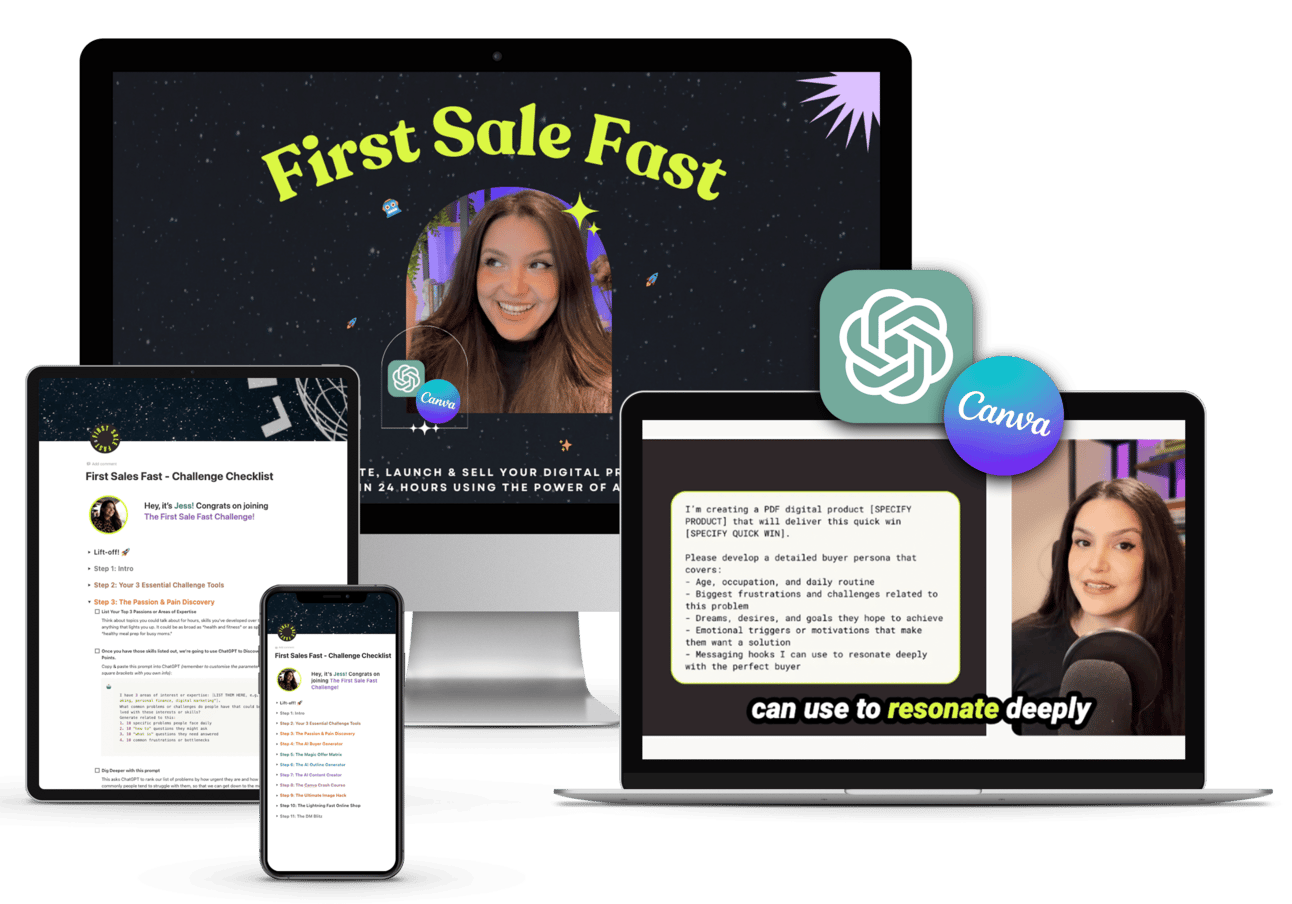
Let’s create your first or next digital product and get it selling in 24 hours with AI and my foolproof 9-step system inside my First Sale Fast challenge!
If you enjoyed today's newsletter AND got to the end of it, I’d love a quick click on the poll below to let me know what you think 💜.
See you next Tuesday,
Jess xx
What did you think of this issue? |